Hegseth's TV Instincts Backfire as Trump Rejects Execution Livestream
Trump blocked Defense Secretary Pete Hegseth's plan to livestream a military execution — the first major public split between the two. Congressional opposition grows.
Key points
- Trump pulled the plug on Hegseth's plan to livestream the Army's firing-squad execution of Fort Hood shooter Nidal Hasan.
- Many Republicans, religious leaders and international observers objected; defence officials expressed relief.
- No US government execution has ever been broadcast; the military has not executed by firing squad since 1945.
- A public split with Trump weakens Hegseth's standing to execute a planned US drawdown in Europe.
- The episode signals governance cracks in Pentagon leadership amid an active conflict with Iran and a contested budget.
The Veto
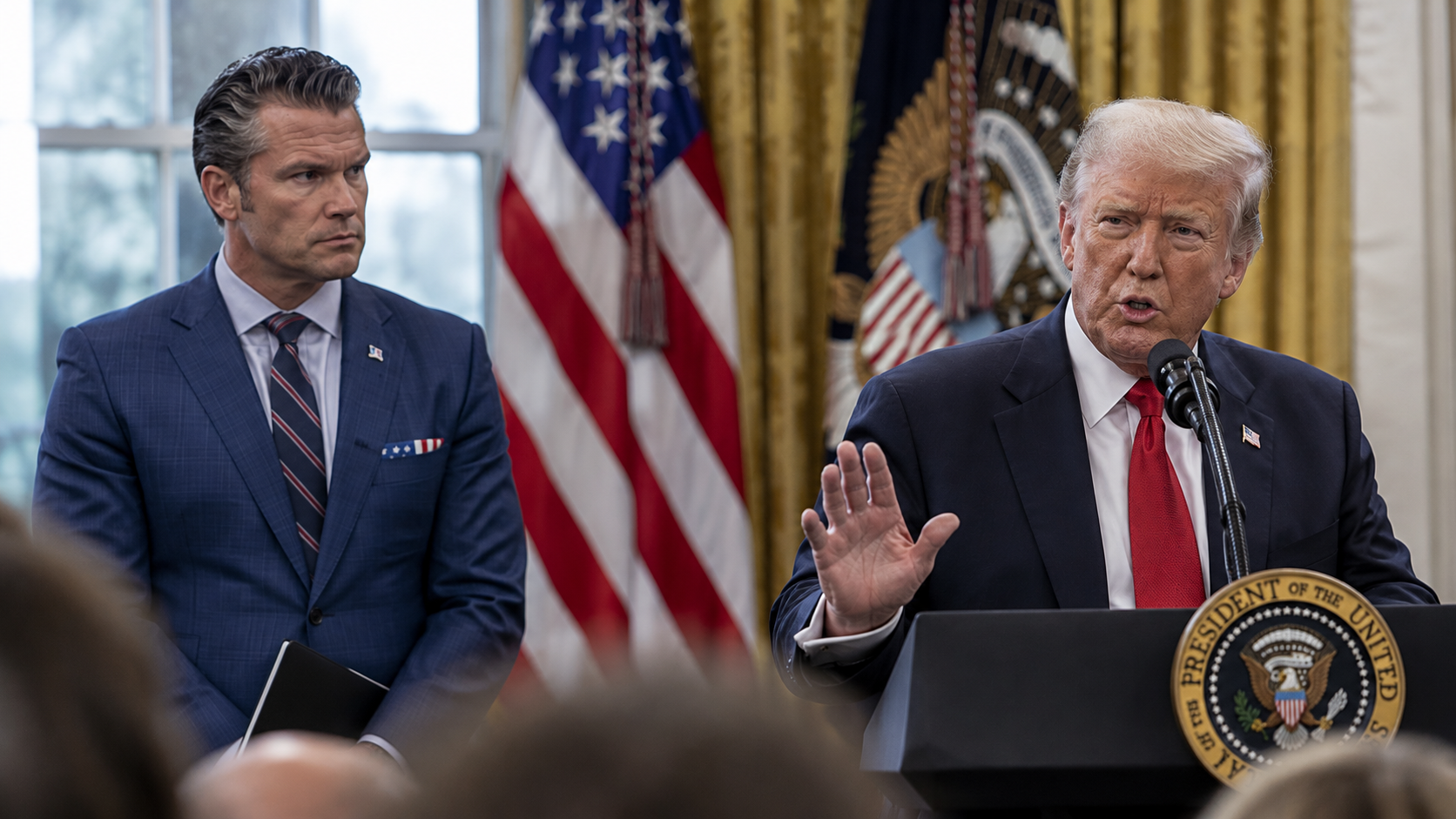
Trump pulled the plug on Defense Secretary Pete Hegseth's plan to livestream the Army's firing-squad execution of Fort Hood shooter Nidal Hasan. A White House official said Trump was unaware of the unprecedented plan.
Many Republicans, religious leaders, and international observers objected. Defence officials told Reuters they were relieved.
The event would have been extraordinary — no US government execution has ever been broadcast. The military has not executed anyone by firing squad since 1945.
Hasan was convicted of premeditated murder for killing 13 people at Fort Hood in 2009. Hegseth argued publicity would show "serious consequences."
Trump accepted the deterrent logic but decided the show went too far. The Pentagon said the two were "completely aligned."
Republican strategists said it was too soon to know if this would affect their relationship.
Alliance Shadow
This is a domestic story with an alliance shadow. Hegseth is expected to draw down US forces in Europe.
Republican lawmakers and congressional aides have raised worries about this. A public split with Trump weakens his standing to execute that drawdown.
A Pentagon chief who cannot control his own communications agenda is a weaker partner for allies already uncertain about US commitment. Critics, including Senator Mark Kelly, framed the livestream as putting the US in the company of Iran and the Taliban.
That is an optics cost in a year when Washington sells itself as the enforcer of norms. Allies read these signals closely when weighing how much of their own defence they must fund.
The Economic Footprint
The direct footprint is negligible. There is no commodity, currency, or trade channel here.
The economic relevance is indirect and second-order. Any perception of instability at the top of the Pentagon affects defence procurement predictability.
It affects allied burden-sharing negotiations. It affects the credibility of security guarantees that underwrite European sovereign spreads.
Defence primes price leadership churn rather than headlines. But repeated turnover at the top of the Pentagon lengthens procurement cycles.
The potential fiscal impact falls on European governments if allies must fund more of their own defence.
Political Risk
A weakened Defence Secretary, amid an active conflict with Iran and a contested budget, raises the probability of discontinuity in US defence spending and force posture.
That is the kind of uncertainty that feeds into defence-sector valuations and European rearmament timelines. Domestically it is a midterm liability question.
Trump's veto shows the White House still prices voter discomfort above personal loyalty. Strategists quoted by Reuters expect the flap to blow over.
But the episode's real yield is a governance signal: the first visible crack in a relationship that has otherwise given Hegseth unusual latitude to reshape the Pentagon.
Hegseth's confirmation was narrow and his congressional base thin. Political capital lost here is capital he will need later for force-posture decisions.