Carney in Ankara: Canada Courts Turkey to Cut US Reliance
Mark Carney's first bilateral visit to Turkey seeks a strategic partnership with Ankara, trading defence and energy ties for leverage in a US tariff fight.
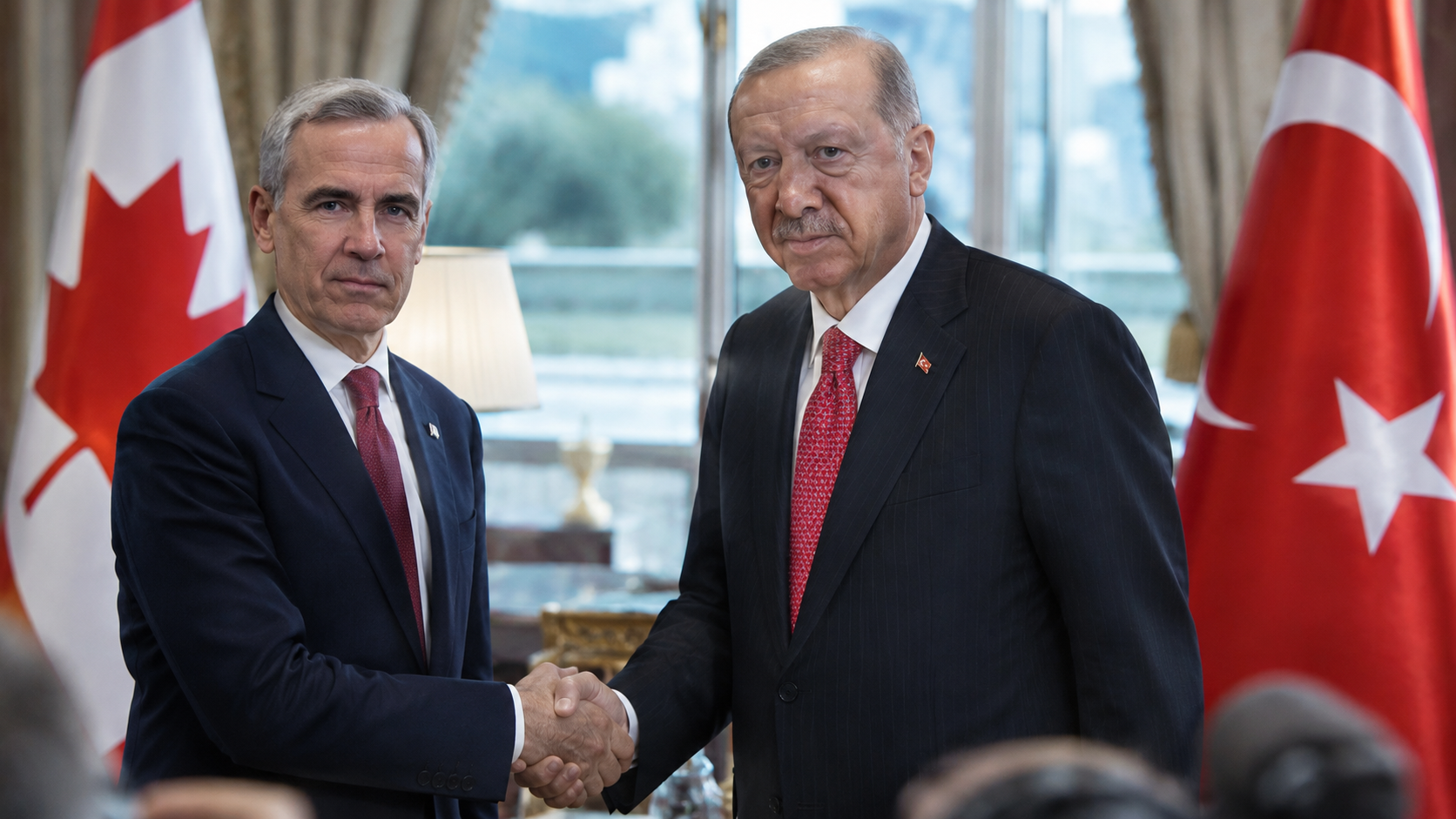
Key points
- Mark Carney's visit to Ankara is the first bilateral Canadian prime-ministerial trip to Turkey, expected to produce a declaration broadening cooperation across defence, energy, trade, investment and security.
- The trip is part of a wider push to shield Canada from a commercial clash with the United States, where President Donald Trump has levied broad tariffs and questioned Canadian sovereignty.
- Turkey represents under 0.3 percent of Canada's merchandise trade, about C$4.34 billion, though flows have climbed almost 50 percent in five years.
- Ottawa has signed more than twenty trade pacts under Carney's drive to double non-US exports within a decade, including a January trip to Beijing that mended China ties.
- Canada scrapped weapons-export curbs on Turkey in 2024, and Turkey became a founding member of Canada's Defence, Security and Resilience Bank at the July NATO summit.
Ottawa's leader is in Ankara for a first-ever bilateral Canadian visit to Turkey, a trip driven less by ceremony than by a hunt for fresh economic anchors as Washington grows hostile. Mark Carney's talks with President Recep Tayyip Erdogan unfold amid American tariffs and sovereignty threats, signalling that Canada is widening its circle of partners.
A First for Canadian-Turkish Diplomacy
The two are expected to sign a declaration broadening cooperation across four fields, defence and energy among them, according to someone briefed on the plans.
A Turkish diplomat says the relationship will be lifted to a strategic partnership.
Carney's jet landed at 0800 GMT, with a palace meeting set for around noon.
Why Ankara, Why Now
Carney is conducting a worldwide trade push intended to shield Canada from a commercial clash with the United States, where President Donald Trump has levied broad tariffs and cast doubt on Canadian sovereignty.
Turkey, a NATO ally, wants capital and collaborators for its arms industry, new atomic plants and mining.
Carney's office presents the visit as positioning Canada as a pivotal partner in commerce and investment.
He is slated to meet leading Turkish business figures.
The agenda covers trade, investment, defence industry, security and energy, the Turkish contact noted.
Timing matters.
The stop follows months of American pressure and reflects a deliberate bid to turn diplomatic goodwill into commercial deals before the next tariff round.
Trade Volumes and the Realpolitik of Diversification
Commerce between the two is modest in absolute terms.
Turkey represents under 0.3 percent of Canada's merchandise trade, about C$4.34 billion (roughly $3.09 billion), yet flows have climbed almost 50 percent in five years.
Canada exports mainly lentils, aircraft and electronics; it imports medical equipment, fishing boats, aircraft engines and jewellery.
Strategic Signalling
Bessma Momani, a political scientist at the University of Waterloo, argues the visit tells Americans that Canada is not waiting passively.
Over the past year Ottawa has signed more than twenty trade pacts under Carney's drive to double non-US exports within a decade.
That drive included a January trip to Beijing that mended fractured China ties and lowered duties on electric vehicles and canola.
The China Comparison
The China parallel is disputed.
Canadian agencies earlier found Chinese meddling in at least two federal elections, yet Carney has called China a steadier commercial counterpart than the United States.
Still, close to 70 percent of Canadian exports keep flowing south, a reminder that diversification is a marathon, not a sprint.
Rights, Realism and the Middle-Power Dilemma
Turkey's suppression of opposition since 2024 and detentions aimed at LGBTQ+ communities have drawn rebukes, but Carney has stressed rights less than predecessors.
Anna Agathangelou, a politics professor at York University, says he must balance fresh economic openings with Canada's middle-power advocacy for equality.
Ankara insists its courts are independent and rejects claims that cases are politically driven.
Defence, Energy and a Strategic Partnership
At the July NATO leaders' summit, Carney and Erdogan kicked off free-trade negotiations, and Turkey became a founding member of Canada's Defence, Security and Resilience Bank.
Turkey has discussed nuclear projects with Canadian engineering firm AtkinsRealis, South Korea's KEPCO and China's State Power Investment Corporation.
In 2024 Canada scrapped weapons-export curbs on Turkey, including optical gear used in drones shipped to dozens of nations.
These moves show defence and energy being wielded as levers in a wider economic strategy.
Whether a strategic partnership with Turkey yields lasting diversification or merely adds diplomatic symbolism will depend on follow-through.
What to Watch Next
Indicators to track include progress on free-trade talks, concrete defence procurement choices, and whether Turkish atomic projects involve Canadian firms.
If they materialise, Ottawa gains a credible alternative route; if not, the visit may be remembered as a timely photo opportunity in a turbulent trade year.
North America