High Gas Prices Strain Detroit's Hungry and Food Banks
Rising gas and diesel prices strain Detroit food banks and low-income seniors ahead of the midterms, while inflation, SNAP cuts, and fuel-driven delivery costs deepen the affordability crisis.
Key points
- Tonya King, a 65-year-old Detroit grandmother, received a food box from Focus: Hope; higher gas prices make it harder for seniors on fixed incomes to reach food distribution points.
- The program now delivers 1,300 monthly boxes, up from 800 at the start of the year.
- Soaring diesel prices, driven by the US-led war on Iran, have raised food delivery costs, while inflation and SNAP cuts increased demand from struggling Americans.
- More than 4.7 million people have lost SNAP benefits since President Trump's tax and spending law took effect.
- A California food bank's diesel spending rose 61 percent from July through September, redirecting roughly a quarter-million meals to fuel costs.
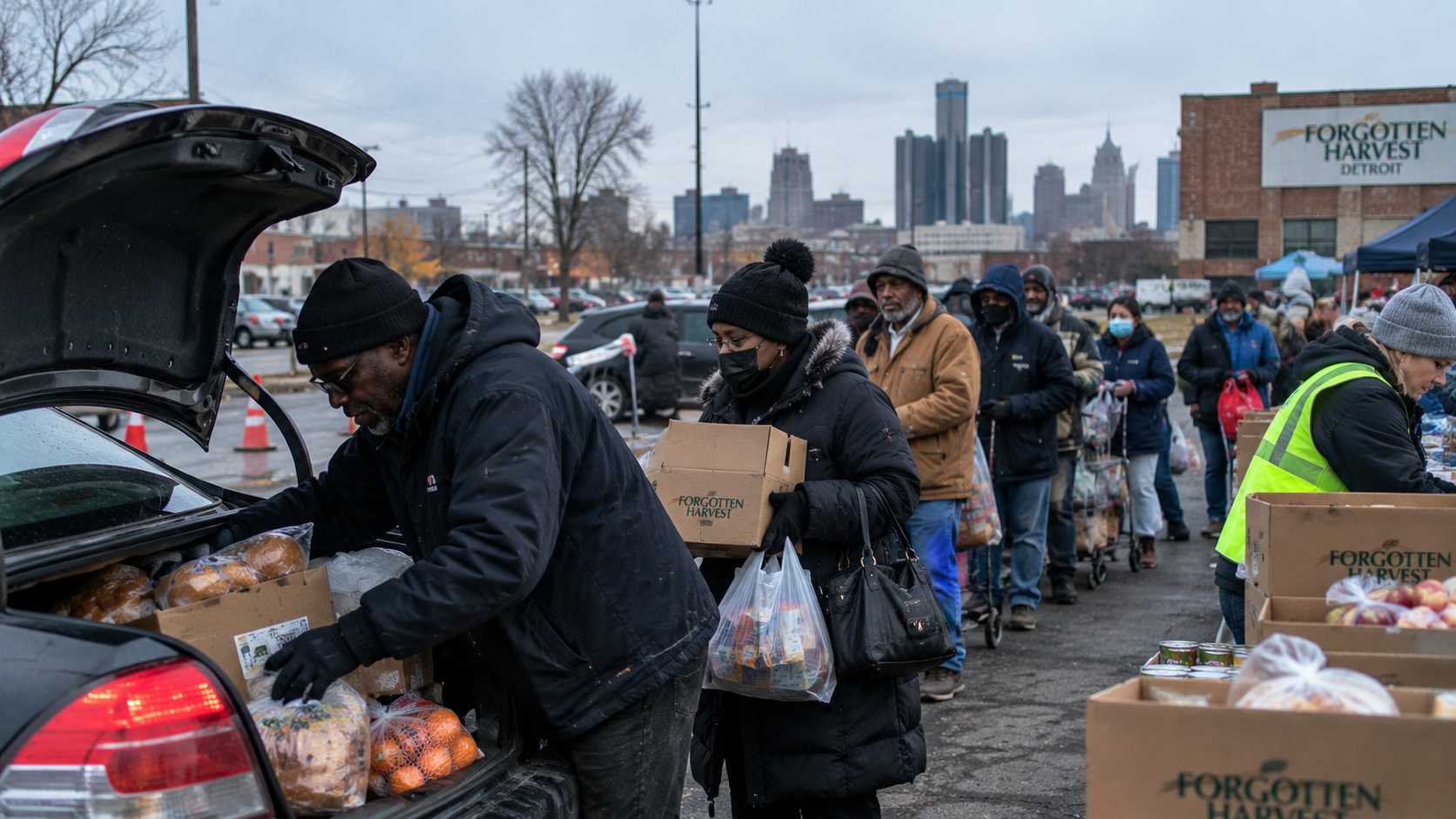
Tonya King, a 65-year-old Detroit grandmother, received a food box from Focus: Hope, a nonprofit that serves low-income seniors.
She had waited for it; the groceries will feed her household of six for two weeks.
Higher gas prices have made it harder for seniors on fixed incomes to reach food distribution points, so the program now delivers 1,300 monthly boxes, up from 800 at the start of the year.
Soaring diesel prices, driven up by the US-led war on Iran, have raised food delivery costs, while inflation and cuts to federal food assistance have increased demand from struggling Americans.
The cost of living has become a central concern for voters in Michigan's competitive US Senate race ahead of the November 3 midterm elections; nearly half of registered voters nationwide cite it as the most important factor in their vote.
King plans to vote for Democrat Abdul El-Sayed, who centers his campaign on the cost of living and healthcare.
Republican Mike Rogers has proposed suspending state and federal gas taxes and cutting taxes to address affordability.
King says she must choose between seizure and diabetes medication; her furnace is broken, there has been no running water for over a month, and she is immobile due to cerebral palsy.
Food pantries nationwide report similar strain: a California food bank's diesel spending rose 61 percent from July through September, redirecting roughly a quarter-million meals to fuel costs; the Greater Chicago Food Depository is shifting to cheaper foods like eggs; retailers who once covered transport costs now share or shift them.
More than 4.7 million people have lost SNAP benefits since President Trump's tax and spending law took effect.
Jona Berry, an 84-year-old retired store clerk in Detroit, says the boxes help her stretch a fixed income as groceries rise.
The Affordability Crisis and the Senate Race
The affordability crisis has moved to the center of American electoral politics, and Michigan's Senate race shows how.
Voters are not abstractly worried about inflation; they are choosing between medication and food, between heating and rent.
King's plan to vote for El-Sayed reflects a demand for direct intervention on the cost of living and healthcare, while Rogers's counter—suspending gas taxes and cutting taxes—offers supply-side relief that may lower pump prices but does not address the income constraints of seniors on fixed benefits.
The SNAP losses, more than 4.7 million people cut since the tax and spending law took effect, are a policy choice with a human cost, and food banks are absorbing the spillover.
The political question is whether either party can claim credit for relief before November 3, or whether the crisis becomes a referendum on incumbent management of the economy.
Either way, the domestic stakes are concrete: a furnace that cannot be fixed, water that cannot run, and a vote cast in hope rather than satisfaction.
Macro Transmission: Fuel to Food
At the macro level, the article traces a fuel-to-food transmission chain: diesel prices, lifted by the Iran war, raise delivery costs for food banks, which then redirect resources from meals to fuel and shift toward cheaper proteins.
That is a supply-side cost shock feeding into food inflation, with distributional consequences concentrated among low-income households on fixed incomes.
The 61 percent diesel spending increase at the Central California Food Bank and the quarter-million meals foregone illustrate how energy prices convert into food insecurity.
On the fiscal side, the simultaneous withdrawal of SNAP benefits—4.7 million people—tightens household budgets just as prices rise, amplifying demand for charitable food assistance.
The macro signal is a negative supply shock in energy propagating through food logistics, compounded by a contraction in transfer payments, producing higher effective inflation for the poorest households and a growing load on nonprofit delivery systems.